ELIAS 4: designing a middleware that composers can actually use.
End-to-end product design for a node-based adaptive audio engine: the strategy against Wwise and FMOD, the Studio's architecture, and the bets behind every screen.
- Four workflow bets against Wwise and FMOD: no soundbanks, one node canvas, live remoting, Python designtime. None of them is an audio feature.
- One mental model everywhere: four content types, a fractal graph, DAW conventions spent exactly where familiarity buys the most.
- Outcomes: the design work anchored a successful funding round and the design function scaled from one designer to five.
A category owned by two incumbents, and their shared weakness.
Role note. I designed ELIAS 4 end to end from 2021 to 2022: IA, core flows, the node editor, and the design system. This study pairs that work with a retrospective read of the shipped product as of 2026. The category is dominated by Wwise and FMOD, both powerful, both carrying decades of interface complexity: soundbank pipelines, rebuild cycles, and learning curves that skew the tools toward audio programmers instead of the composers and sound designers who author the content. That defined the brief: the entire competitive strategy rests on interface and workflow quality.
Personas reflect the two authoring roles the product was built for, drawn from studio partners and community feedback during development.
The incumbents' weakness isn't capability, it's friction. Every major feature decision attacks a specific incumbent friction point.
None of them is an audio feature.
Kills the rebuild cycle that breaks flow on every content change; "fast workflow without soundbanks" is the headline, not a footnote.
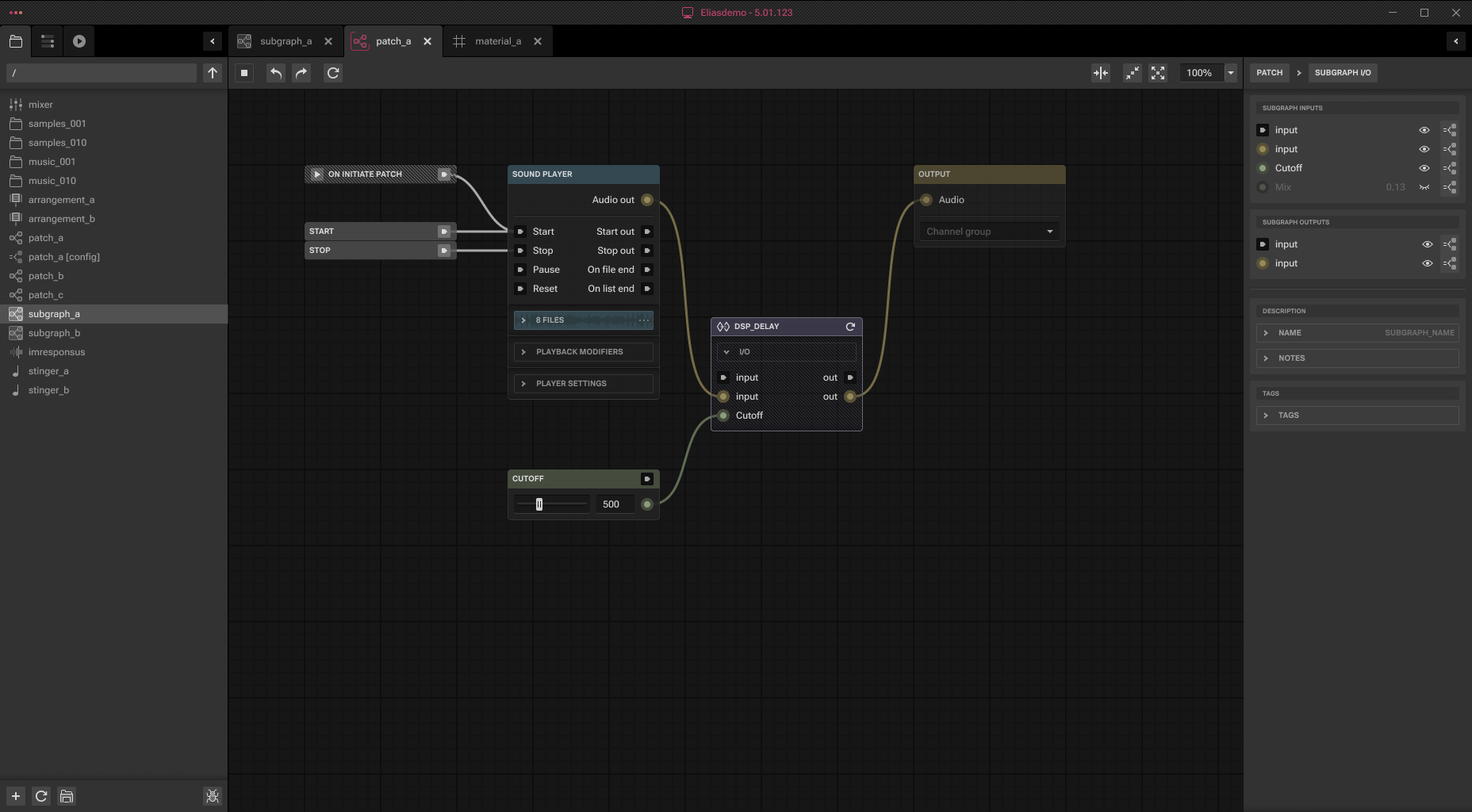
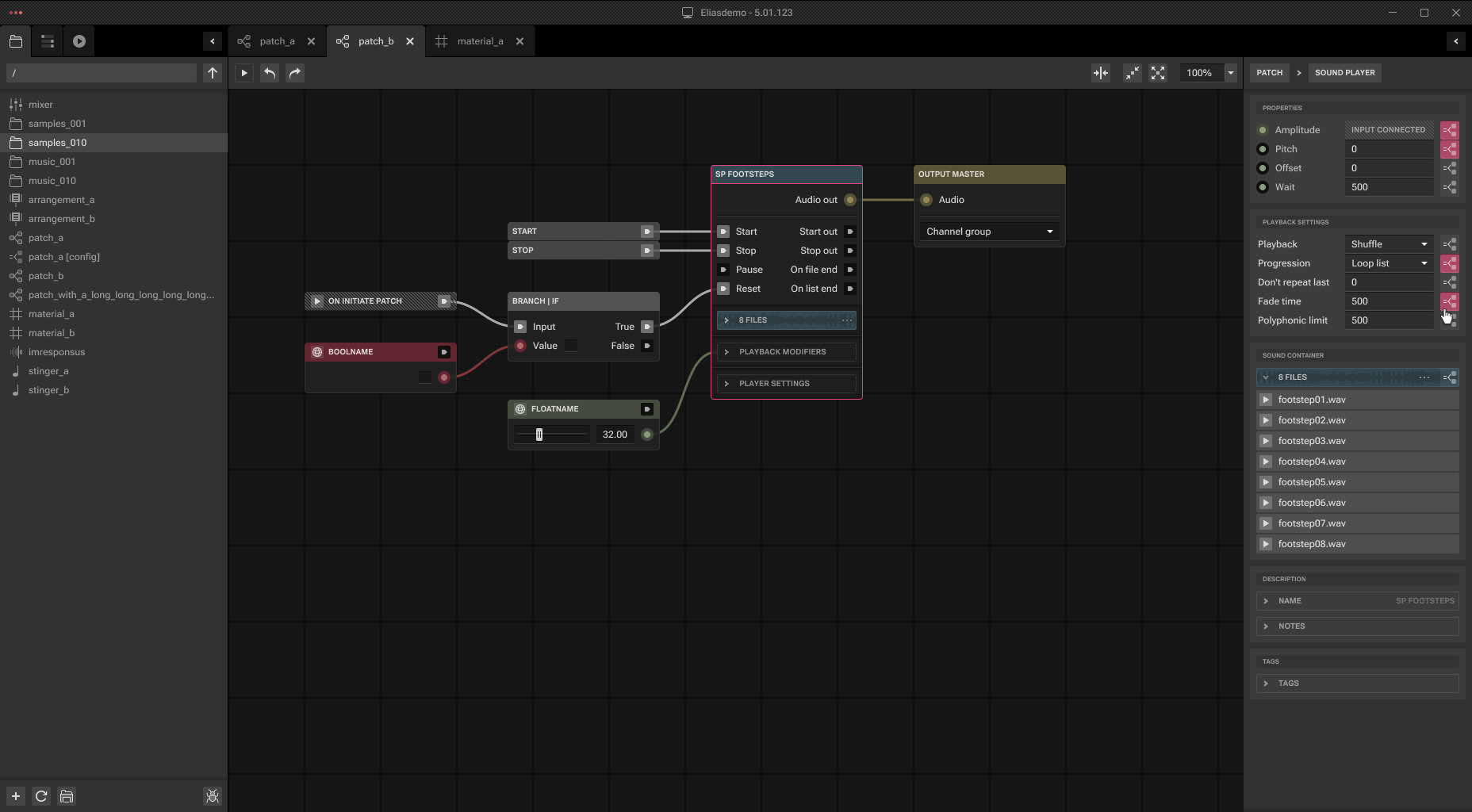
Signal, logic, parameters and DSP on one sample-perfect canvas that non-programmers can read and author.
Connect to a running game session and mix, swap, and tweak with instant in-game updates.
Studios script their own tools against live project data, so the tool becomes a platform.
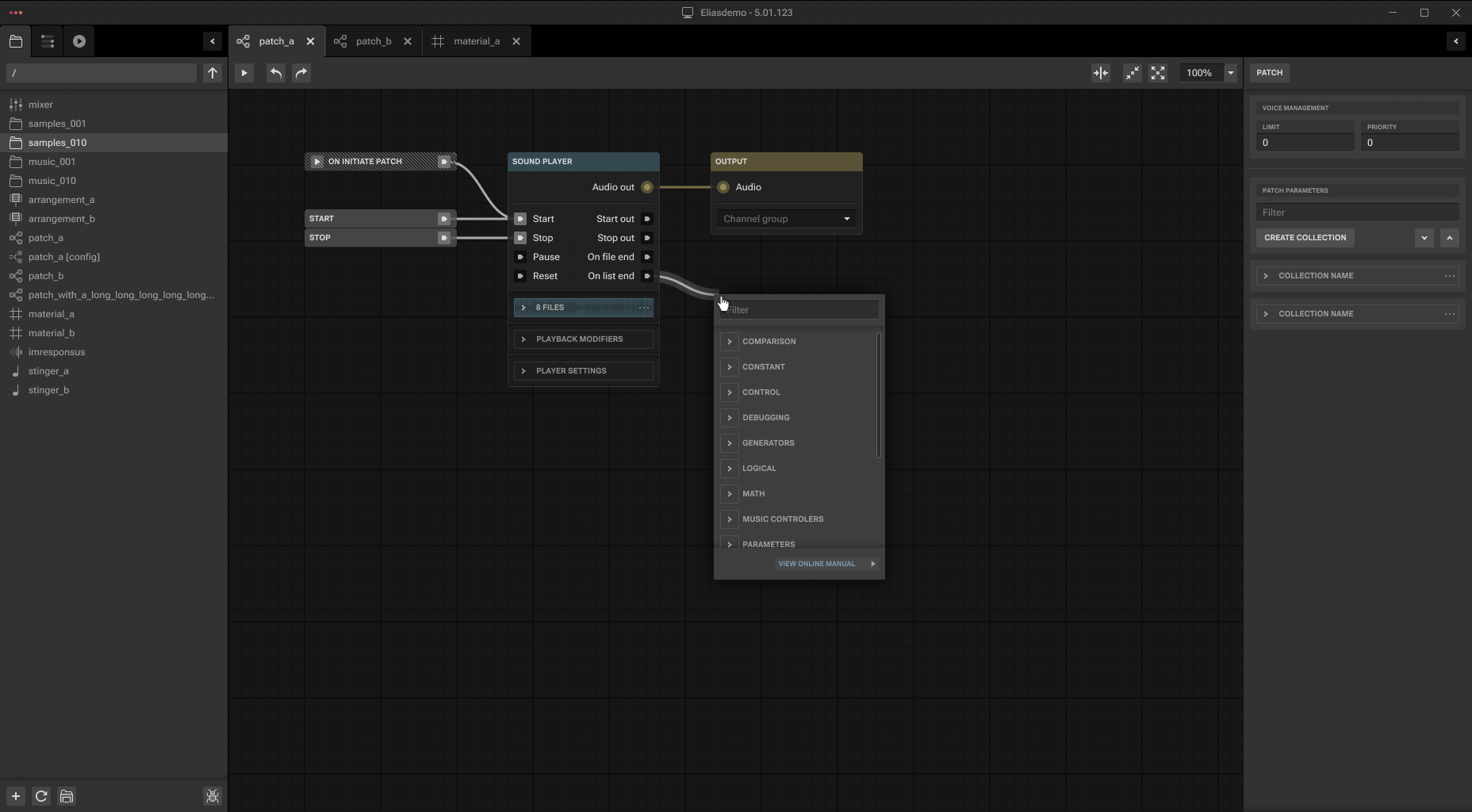
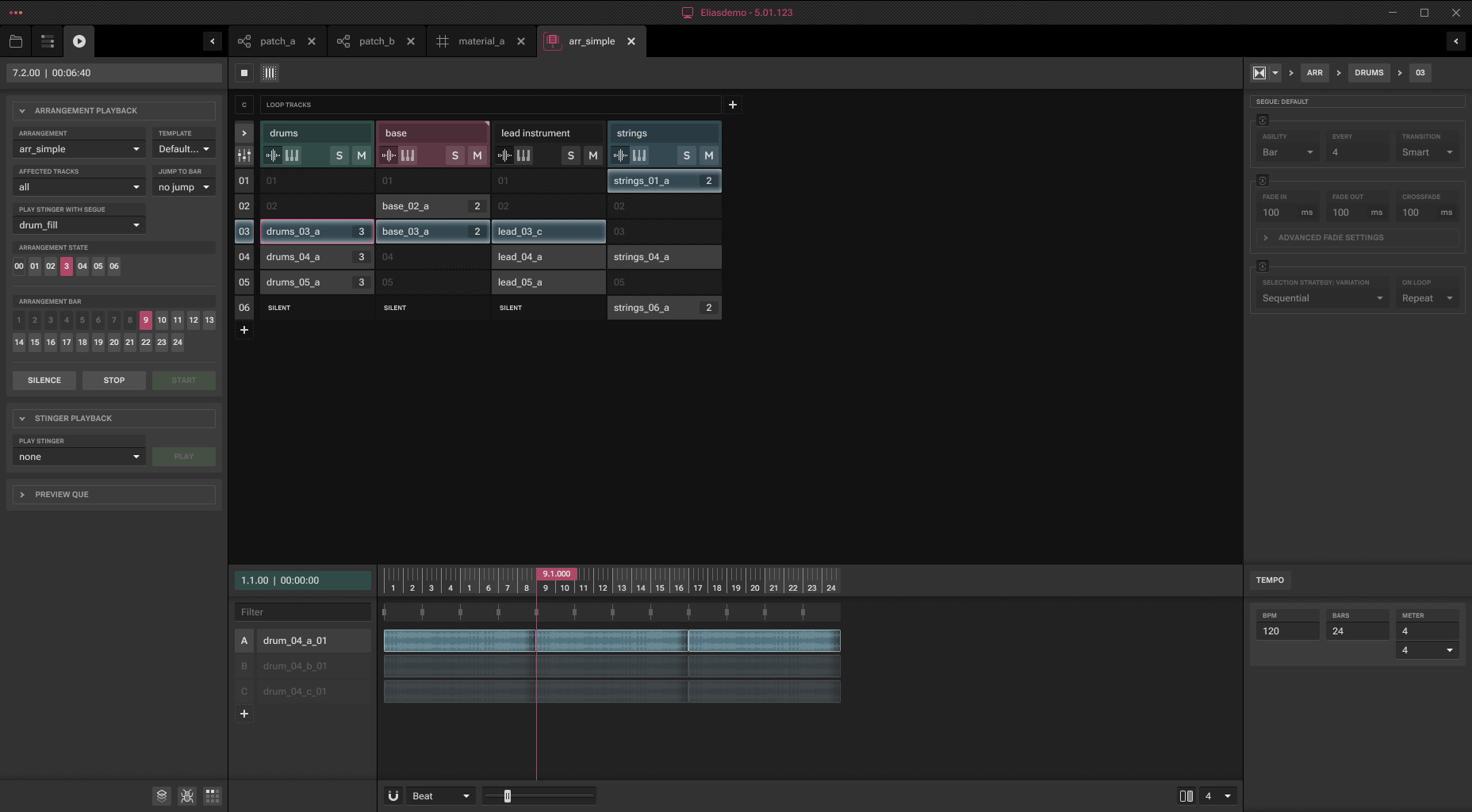
One mental model, four zones, fractal depth.
What the design work unlocked.
The design work was a core asset in the successful funding round.
Design grew from one designer to a dedicated 5-person team building inside the system I established.
IA, core flows, the node editor interaction model, and the design system shipped as the durable skeleton of the product.
Graph search and a minimap were still open design debt when I left; at hundreds of nodes, find and jump matter as much as editing.
Outcomes as credited during my tenure; funding specifics are the company's confidential information.
What I'd reuse anywhere. Pick one loop and collapse it. Spend familiarity to buy novelty. Make the data model visible, so users debug themselves. And give pros escape hatches: extensibility isn't a power feature, it's a trust feature. ELIAS 4 is challenger UX in one line: don't out-feature the incumbents, out-flow them.
Screens © Elias Software / House of Elias.