Case study Gaming · Growth & Monetization

Make a 28-day season feel like a 10-year collection.

A digital sticker album that turned a Bundesliga IP partnership into a long-tail meta-game for Top Eleven managers worldwide.

RoleSenior UX Designer
CompanyNordeus (Top Eleven)
Timeline2025, shipped for the December window
PlatformiOS / Android, global
↑ ARPUMaterial lift across the Bundesliga window
+DAUDaily uplift on the Gallery tab post-launch
18 clubsNatural progression milestones, fully modular
Top driverGallery-linked SKUs led store revenue in the window

Measured in Mixpanel against the pre-launch seasonal baseline; exact values are confidential, so directions and relative magnitudes are stated instead.

In 30 seconds
  • The bet: an album-first, earn-first collection that gives a 10-year game its first permanent record of play, anchored to the real Bundesliga calendar.
  • The craft call: the strongest-testing reveal was cut to a 2-second flip so 100% of devices ran it stable, and duplicates recycle into earning instead of dead-ending.
  • The result: Gallery-linked SKUs led store revenue in the window with daily uplift on the tab; new-install retention stayed the miss.
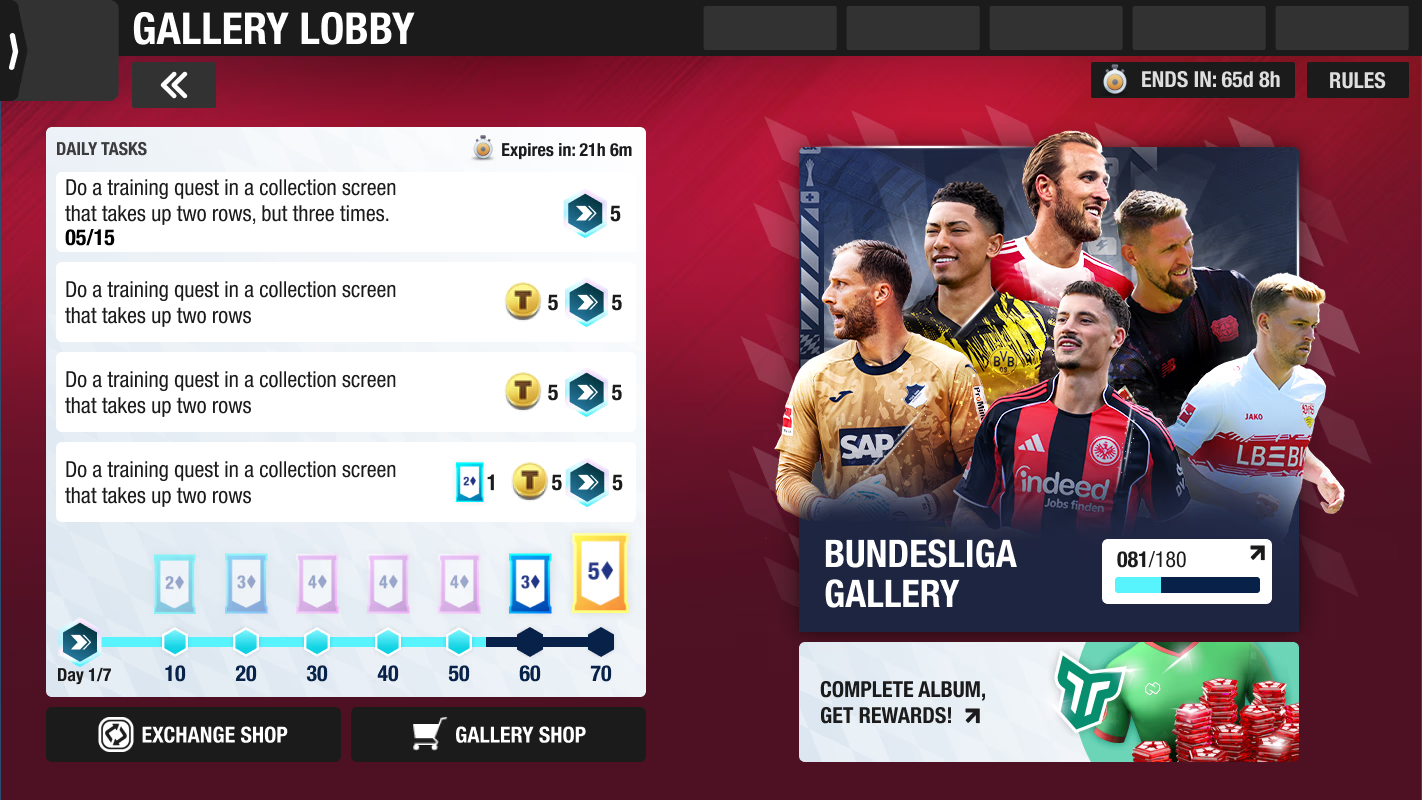
Bundesliga Gallery lobby screen: daily tasks list on the left, album cover with collection progress on the right
FIG. 01 The Gallery Lobby. Daily tasks fund pack earning on the left; the album cover and collection progress anchor the right.
Context

A hard-earned core loop, and a meta that ended every 28 days.

Top Eleven is a 10-year-old football management game with a hard-earned core loop: 28-day seasons, daily lineup decisions, sponsor revenue. The economy works, but the meta is short. Players who finish a season have no permanent artifact of what they built, and IP partnerships (kits, sponsor deals) historically lived as cosmetic skins that decayed the moment the season ended.

The Bundesliga deal was an opportunity to do something different: not another skin layer, but a persistent collection that compounds across seasons. Competing collectible products (FIFA packs, the Panini sticker album) had already taught players what good feels like. Anything we shipped would be measured against those benchmarks, not against the previous Top Eleven feature set.

Problem & discovery

Two managers, one game, very different friction.

Two manager archetypes drove the design. Their behavior overlapped, but their friction was very different.

The Veteran Manager

Behavior

Logs in twice a day, has played 30+ seasons, knows every formation tweak. Buys sponsor packs occasionally, mostly grinds.

Friction

Has nothing to show for a decade of play. Season trophies reset, achievements feel hollow, late-game has no horizon.

"I've won this league more times than I can count. After a while you stop caring because nothing carries over."

The Casual Returner

Behavior

Plays in bursts around the real football season. Cares about clubs and players, less about ladder rank or formations.

Friction

Comes back, finds nothing new tied to real football. The IP they care about (Bundesliga, players, kits) never actually shows up in a meaningful loop.

"I love the Bundesliga. I just don't see it in the game in a way that makes me want to stay."

Composite archetypes drawn from player interviews, community threads, and Mixpanel cohort splits. Quotes are illustrative voice.

Core architectural challenges

Three problems that had to be solved structurally, not visually.

01

Cold-start of a collection economy

A sticker album feels worthless when empty and overwhelming when sparse. We had to design the first-90-seconds feel: what does a brand-new manager see, and how does day one not look like a guilt-trip checklist of 200 missing cards?

02

Grafting a meta-layer onto a 10-year-old IA

Top Eleven's navigation is sacred to long-time players. A new top-level destination risks fragmenting the daily loop. Hiding it risks the feature never being discovered.

03

Economy propagation across systems

Pack drops had to interact cleanly with sponsors, daily tasks, live events, and the existing token economy, without inflating any single currency or starving another.

The insight

This wasn't about building a better pack-opening. It was about giving a 10-year-old game its first permanent record of play, by treating real-world football's calendar as the spine of a collection that outlives any single in-game year.

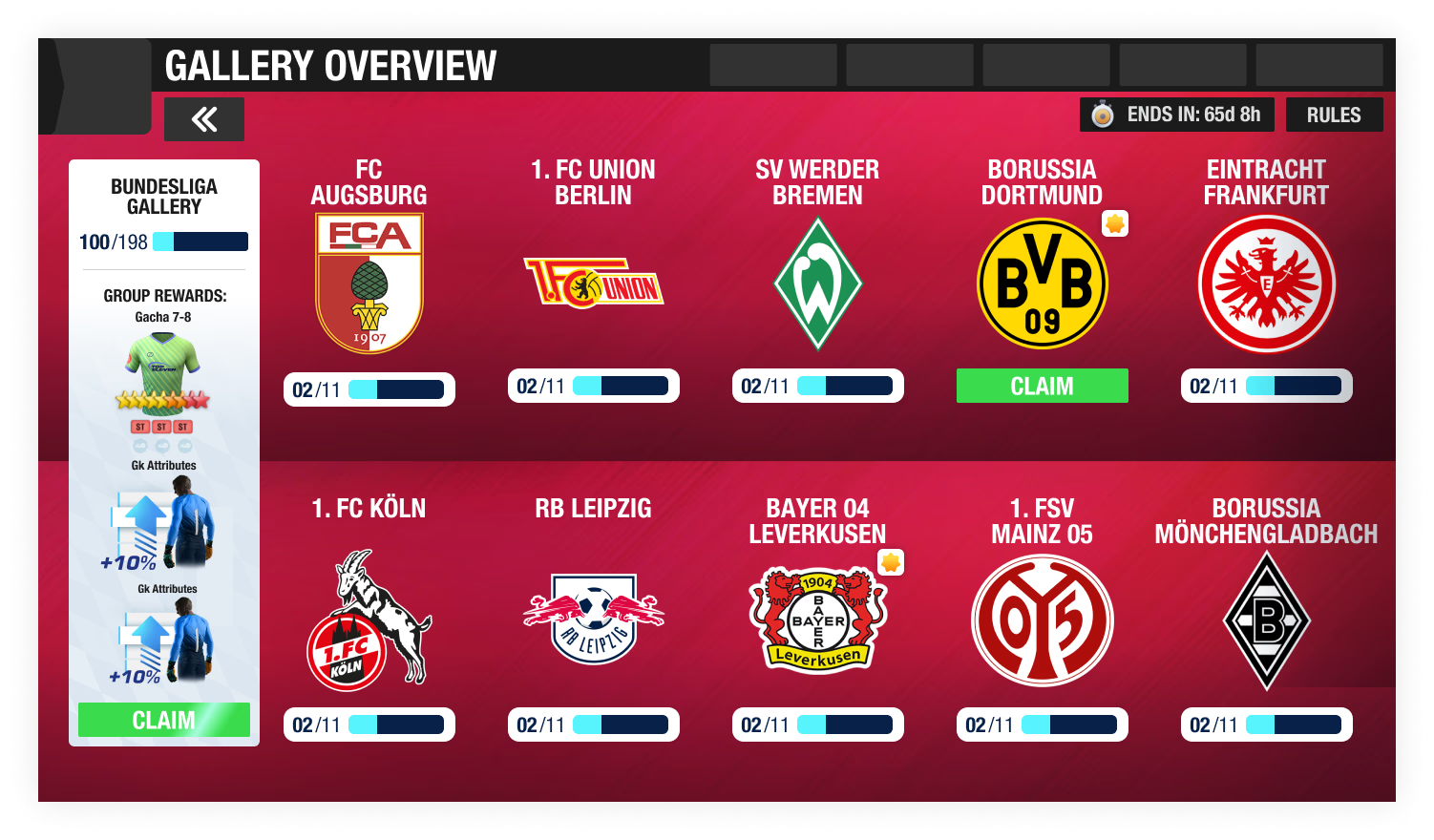
Gallery overview screen showing all 18 Bundesliga clubs as collectible sets with per-club progress bars
FIG. 02 The Gallery Overview. All 18 clubs visible from day one as sets to complete; progress anchors to real-world structure, not rarity tiers.
Key product decisions

Two calls that defined the economy and the mental model.

01

Earn-first, buy-second pack economy

We could have led with a store. Instead, the primary entry point for packs is daily tasks and live events, gameplay already in flow. The store exists as an accelerator, not a gate. The trade-off: lower direct conversion on day one, much higher long-term ARPU because the feature feels earned, not paywalled.

02

Album-first, not card-first

The competitor mental model is "collect rare cards." Ours is "complete the club." Cards are ordered, the 18 clubs are visible from day one as empty slots, and rarity sits inside that frame instead of on top of it. This anchors progress to a real-world structure managers already understand, and pushes set-completion as the dominant motivator over rarity-chasing.

Daily tasks and live events Packs earned, not bought Album progress 18 clubs as sets Set rewards permanent record of play Store accelerator, not gate Duplicates no dead ends Recycle currency feeds pack earning the loop that rescued sessions 4 to 10
FIG. 03 The earn-first economy loop. Packs come from play, sets pay permanent rewards, and duplicates recycle back into earning instead of dead-ending. The store accelerates the loop but never gates it.
Player card claim screen showing a revealed player with role, special ability, and playstyle attributes
FIG. 04 The claim moment. A 2-second flip with haptics replaced the original 6 to 8 second multi-stage reveal.
Process & testing

Three findings that changed the shipped product.

01

The reveal cut

The original 6 to 8 second multi-stage pack reveal was the strongest-testing moment in playtests. Engineering then flagged frame drops and mid-reveal crashes on a meaningful slice of low-end Android. I cut it to a 2-second flip, kept the haptic as the non-negotiable, and shipped stable to 100% of players on day one. A polished reveal that 30% of the audience couldn't run was not the right call.

02

The empty-album problem

First playtests with a blank album surfaced the cold-start failure exactly as feared: testers read it as a chore list. The structural fix was to open the onboarding pack inside the album, not on a separate screen, so the first interaction is "look what you already have," not "look what you're missing."

03

Duplicate handling

Early prototypes treated duplicates as a dead-end, and testers got frustrated within two sessions. We added a duplicate-recycling currency that feeds back into pack earning. A small change that shifted the long-tail emotional curve and rescued sessions 4 to 10 from churn.

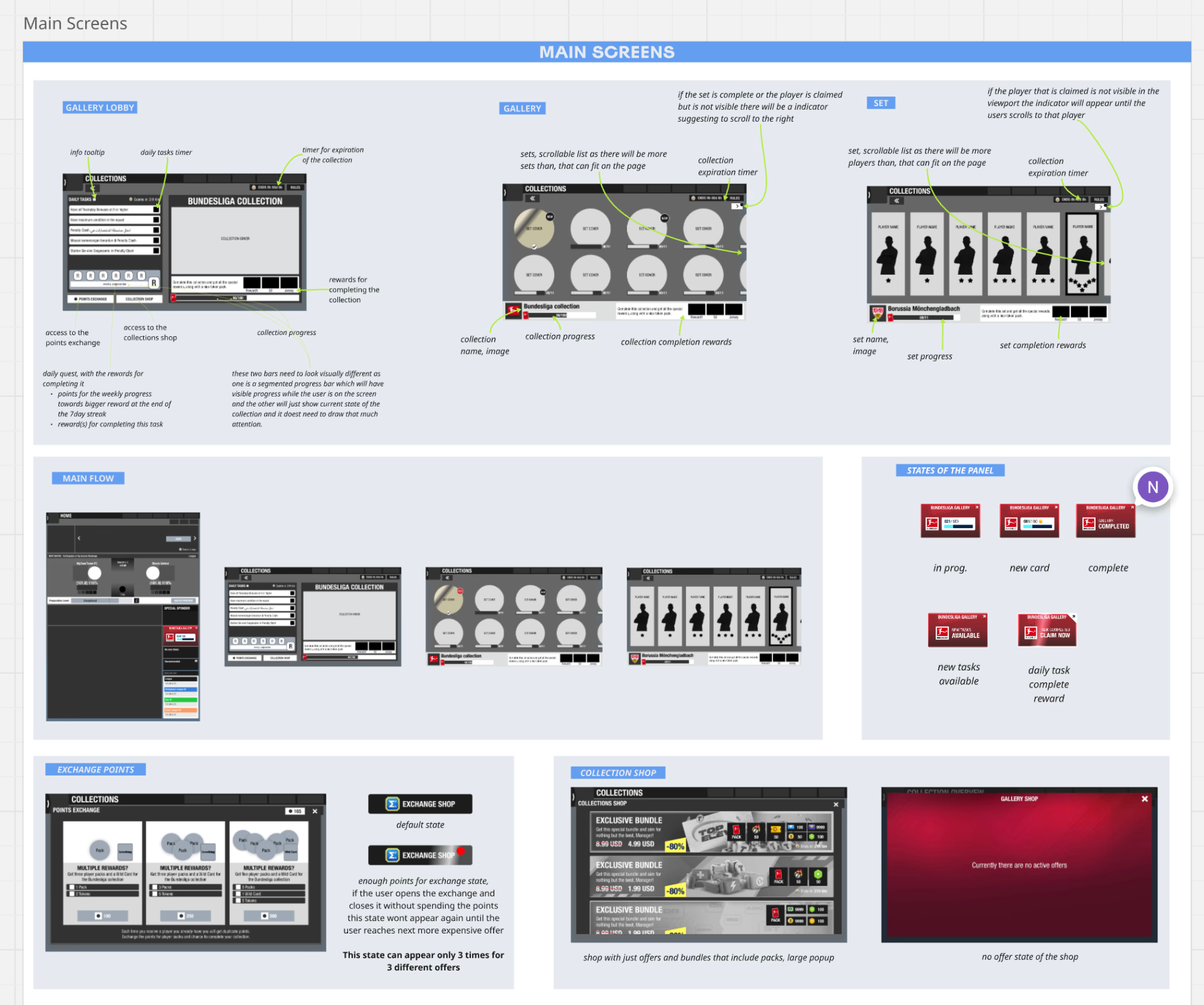
Annotated wireframe specification board covering the gallery lobby, overview, set screens, panel states, points exchange, and collection shop
FIG. 05 The working spec. Annotated main-screen flows covering lobby, gallery, sets, panel states, points exchange, and the collection shop, written for clean engineering handoff.
Results & metrics

What moved, and what didn't.

Monetization

Gallery-linked SKUs became a primary driver of store revenue during the Bundesliga window, with meaningful lift on Special Sponsor packs.

Engagement

Notable daily uplift on the Gallery tab. The meta-layer successfully became part of the daily route, not a side trip.

Community

The qualitative read on Reddit and Discord trended toward "must-complete" framing rather than "another monetization grab."

Weakest score

First-week retention on brand-new installs barely moved. The feature lands best on players who already have an emotional stake in their club roster. Newcomers don't carry that context yet, and we didn't design a strong enough on-ramp for them.

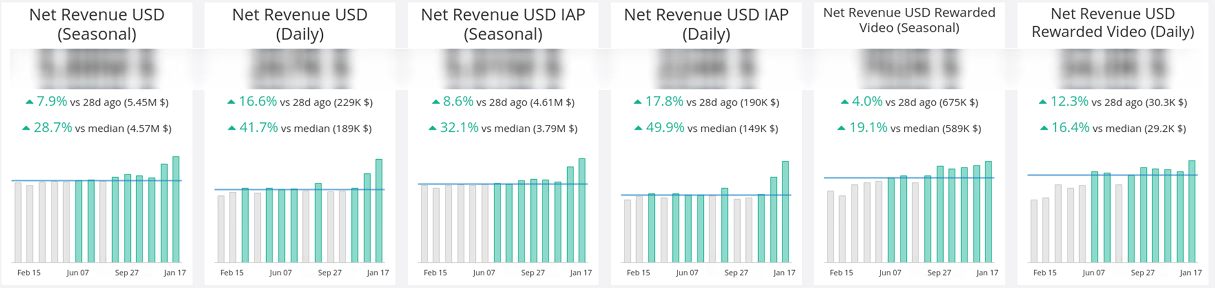
Six net revenue dashboard tiles showing seasonal and daily upward trends across IAP and rewarded video, absolute values redacted
FIG. 06 Net revenue trend across the window: seasonal and daily, IAP and rewarded video. Absolute values redacted.
Deep retrospective

What I'd argue about with my past self.

The missing social layer. Trading duplicates between managers would have created a second loop on top of the first, and likely lifted session frequency more than any economy tweak. We deprioritized it for scope. I still think that was the right call for v1, and the wrong call for v1.5, which never shipped on the timeline I wanted.

The cut reveal. I'm conflicted about it. It was the right product decision. It was also a real loss of craft, and next time I'd push harder for the optimization budget upfront rather than negotiating it after the design lands.

Personal growth. I came out of this far less precious about animation fidelity, and far more aware that the "right" experience is the one 100% of your audience can actually run.

Next: ZenDocs, one uploader, nine funnels.

A full-funnel teardown of a utility sold as a subscription.